
Explore a curated archive of legal opinions, constitutional guidance, and trust-related documents designed to bring greater clarity to wealth preservation, asset protection, and generational planning.
Where Authority Meets Clarity
Welcome to our Legal Opinion section, your gateway to expert legal insight presented in a refined, easy-to-explore format. Here, curated opinion letters, constitutional references, and trust-related legal materials help illuminate complex issues that matter to business owners, professionals, and legacy-minded families.
Whether you are expanding your understanding, reviewing supporting documents, or seeking a deeper appreciation of how law, taxation, and contractual rights interact, this collection is designed to deliver clarity with authority.
Explore a foundational overview of the Contract Clause and its role in protecting private agreements from state interference. This section is designed to provide a high-level legal perspective in a format that is easier to understand and reference.
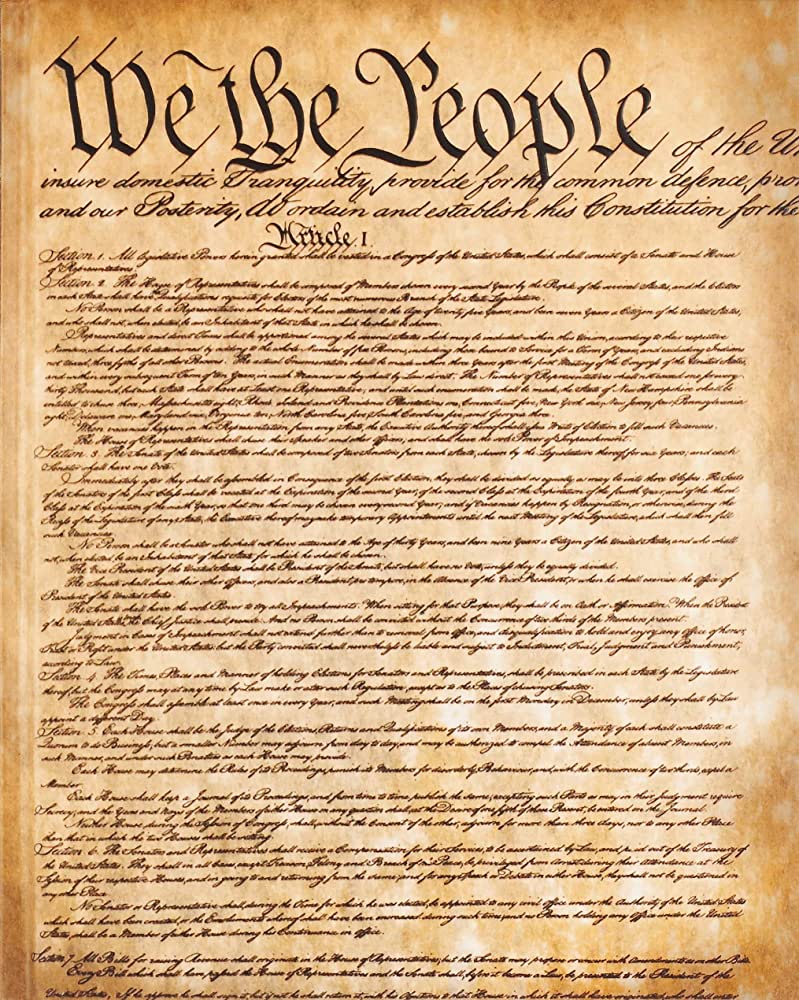
A Curated Archive of Authority
These legal analyses and supporting documents provide insight into trust structure, tax treatment, fiduciary allocation, compliance, and constitutional principles relevant to legacy planning and asset protection.
Legal opinion letter supporting trust-related interpretation and structure.
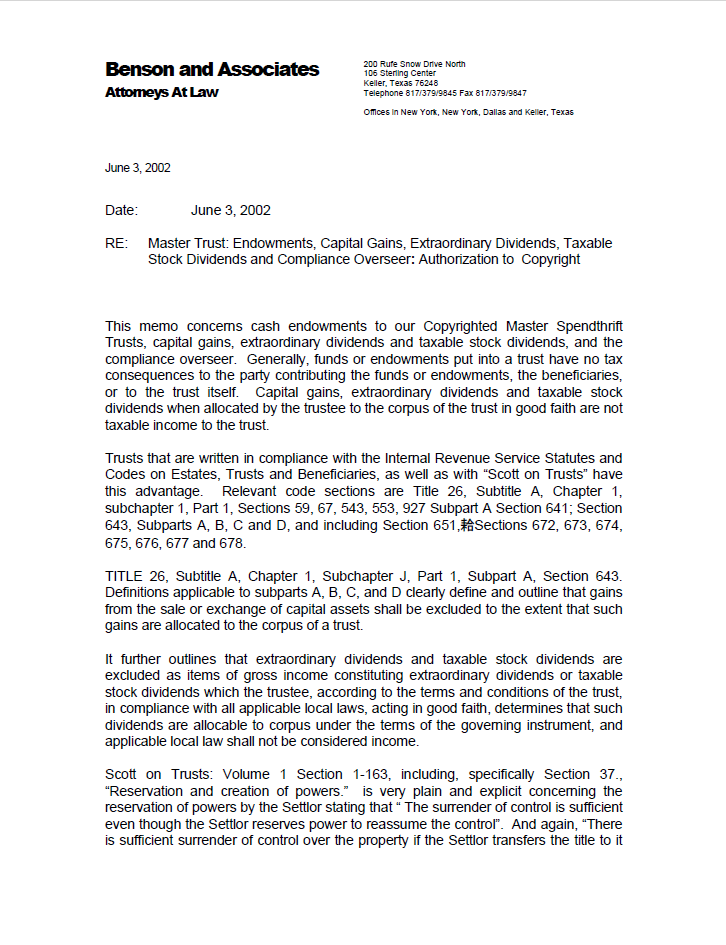
Opinion letter offering perspective on legal trust positioning and interpretation.
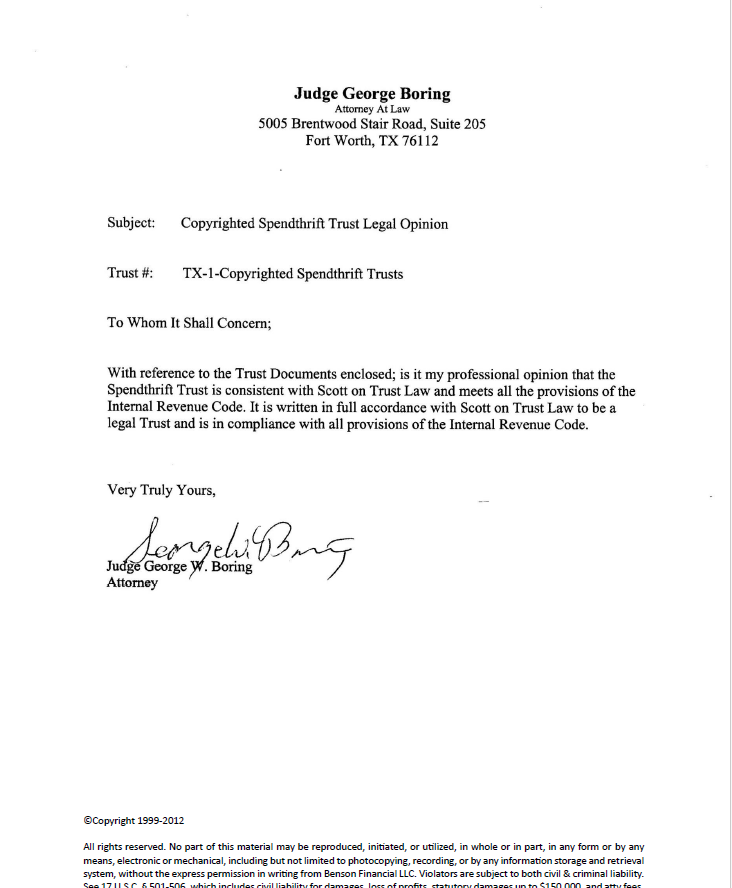
Reference document addressing trust law considerations and related analysis.

Review this document for cautionary context surrounding improper trust promotion.
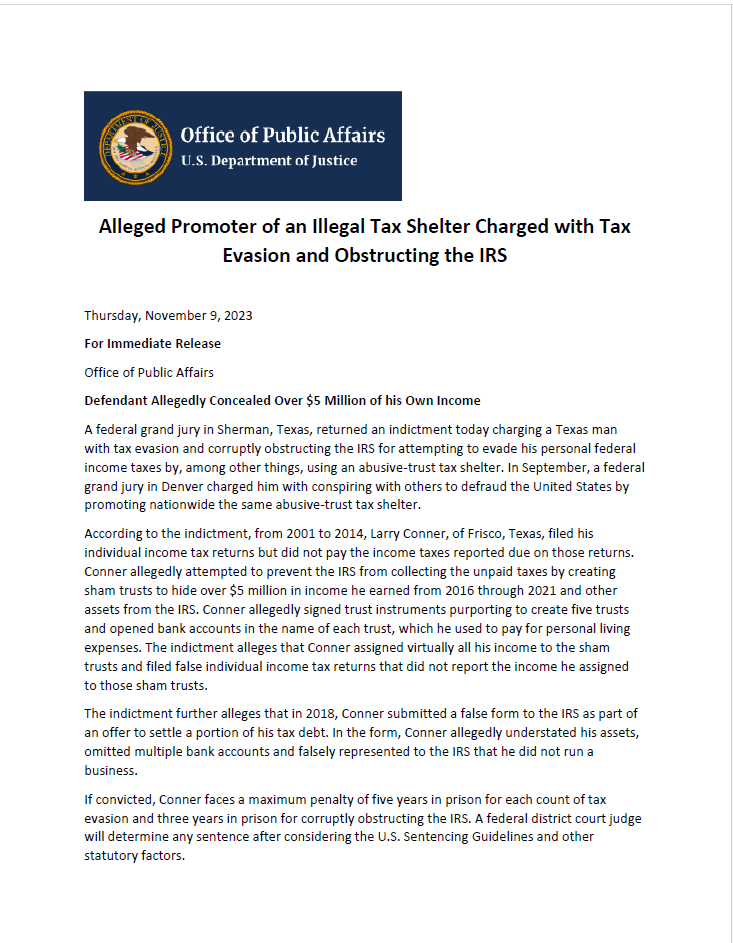
A federal document highlighting allegations tied to prohibited tax shelter activity.
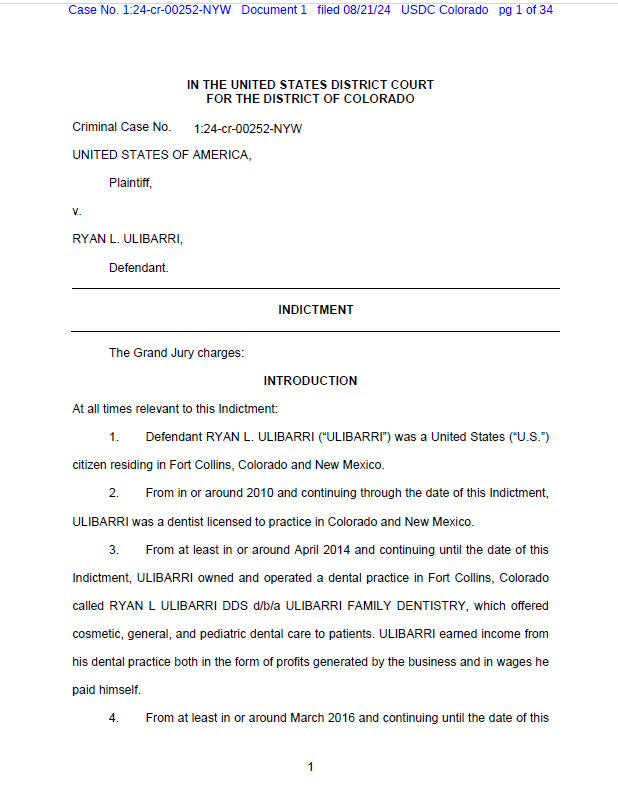
Legal reference letter supporting interpretation relevant to trust administration.
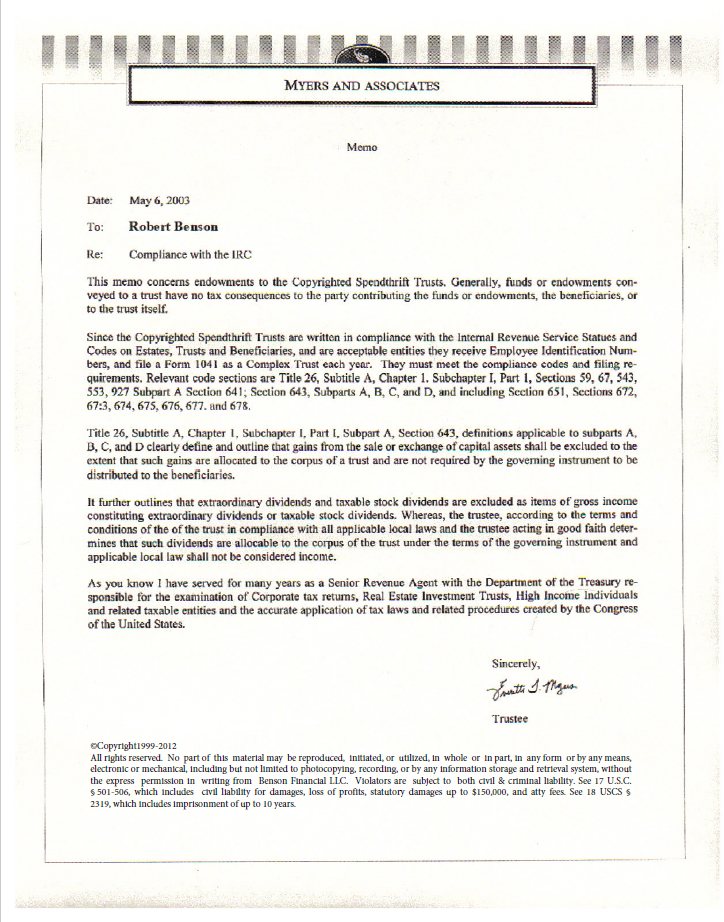
Opinion letter offering legal support and guidance on trust-related issues.
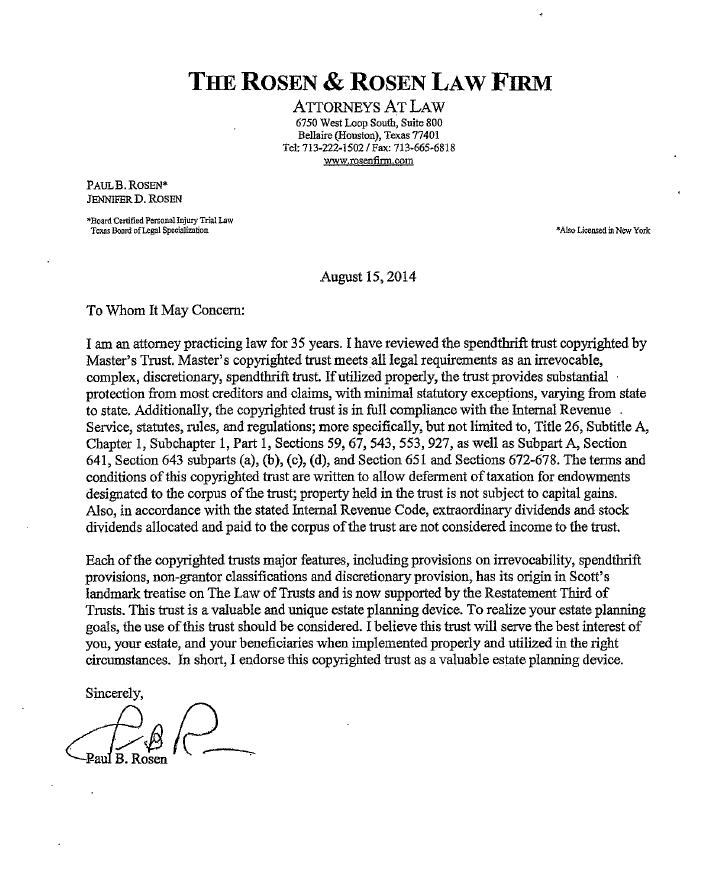
Reference material connected to trust interpretation and tax authority review.
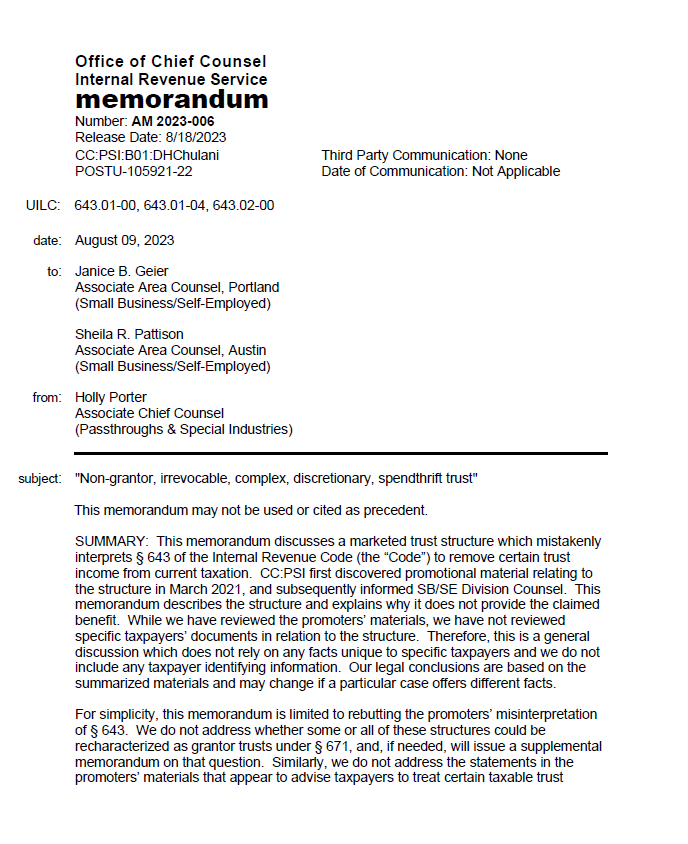
Treasury-related source material for additional compliance and code reference.
Supporting resource for reviewing applicable tax provisions and compliance language.
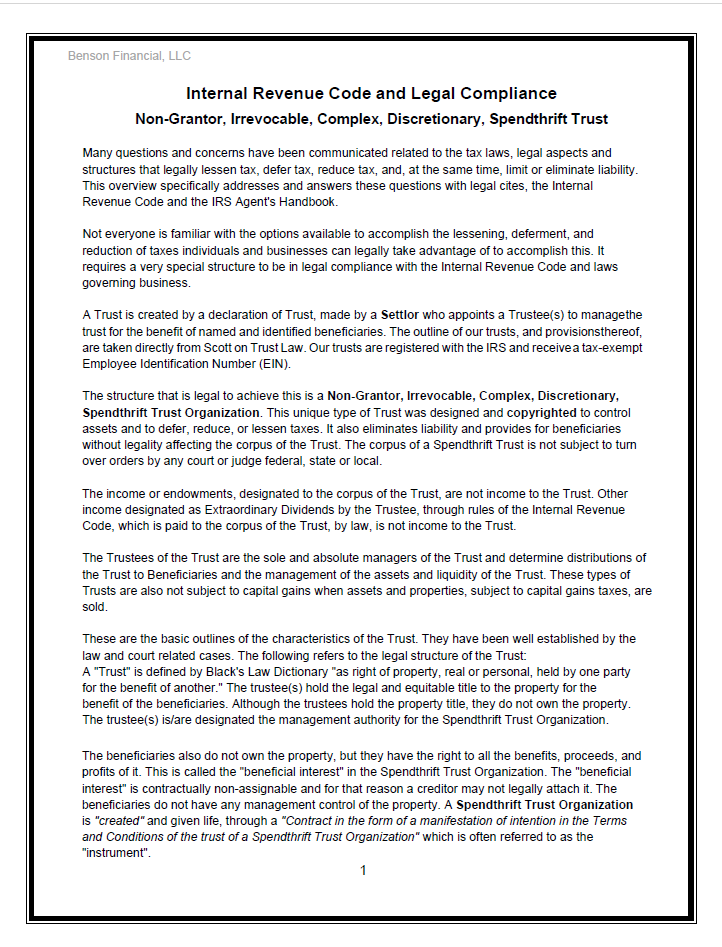
Analysis addressing IRC § 643 and the income taxation of non-grantor trusts.

Article I, Section 10, Clause 1:
No State shall enter into any Treaty, Alliance, or Confederation; grant Letters of Marque and Reprisal; coin Money; emit Bills of Credit; make any Thing but gold and silver Coin a Tender in Payment of Debts; pass any Bill of Attainder, ex post facto Law, or Law impairing the Obligation of Contracts, or grant any Title of Nobility.
In addition to prohibiting states from enacting bills of attainder and ex post facto laws, the Constitution seeks to protect private rights from state interference by limiting the states’ power to enact legislation that alters existing contract rights. The Constitution’s Contract Clause provides: “No State shall . . . pass any . . . Law impairing the Obligation of Contracts.”
Although this language could be read as completely prohibiting a state’s legislative impairment of contracts, the Supreme Court has interpreted the clause to limit a state’s power to enact legislation that: (1) breaches or modifies its own contracts; or (2) regulates contracts between private parties.
The Supreme Court has held that the Contract Clause does not generally prevent states from enacting laws to protect the welfare of their citizens. Thus, states retain some authority to enact laws with retroactive effect that alter contractual or other legal relations among individuals and entities. However, a state’s regulation of contracts, whether involving public or private parties, must generally be reasonably designed and appropriately tailored to achieve a legitimate public purpose.
Prior to the ratification of the Fourteenth Amendment and the subsequent development of the Supreme Court’s Due Process jurisprudence, the Contract Clause was one of the few constitutional clauses that expressly limited the power of the states.
During the New Deal Era, in Home Building & Loan Ass’n v. Blaisdell, the Supreme Court upheld a Minnesota mortgage moratorium, signaling that it would allow states greater latitude under their police powers when the public welfare was at stake.